IMAGES:


FB008:

Dead Letters Spell Out Dead Words
Lost in Reflections

Format: LP+7"

Buy it!

TRACKLIST:

A. This Room Seems Empty Without You
B. Lost & Losing
C1. What I Wouldn't Give To Feel Alive
C2. IN Crowded Rooms, On Empty Streets
C3. What Stays And What Fades Away
D. Himmelschreibende Herzen

INFORMATION:

As Dead Letters Spell Out Dead Words, Gothenburg based composer and sound artist Thomas Ekelund has delved into a time-consuming investigation of the complex, multi-faceted world of solitude and introspective darkness. His pallet is strictly greyscale, but the tones he uses are deeper, more honest and more heartfelt than anything else out there.

»Lost in Reflections« is Dead Letters Spell Out Dead Words’ fourth main album and his definite masterpiece so far. Here, hurt is transformed into absolute beauty. And here, dampened drones make pop art.

This, in the words of Thomas Ekelund himself, is how the album came about:

Eighteen months ago I was diagnosed with Borderline Personality Disorder, a both vile and many-faced disease that inevitably drapes every aspect of life in shadows that range from shades of grey to coal black. It causes a polarity of mind, everything is either or, never in between. It makes you feel isolated and alone even in the most crowded rooms. Slowly this imagined isolation becomes a real isolation. You do not allow anyone inside the carefully constructed walls, built stone by stone by a mind so completely preoccupied with guilt and shame that you in fact become unhuman (sic). An empty shell containing oozing, black bile and nothing else. You become the disease.

I never look into mirrors unless it's absolutely necessary. Because I don't see the reflection of man, I see a specter, a phantasm, a distorted human-like figure to which I can't relate. I never look into the eyes of anyone I talk to because I am terrified that they will see the same apparition. I try to achieve invisibility, but in lack of that I hide my true appearance behind meticulously molded masks.

Eighteen months ago, »Lost in Reflections« was already half a year old. Still it deals with the above mentioned disease and some of the aspects of it. Its strange how the mind can be so aware and unaware at the same time.

Now it's two years later. And though I in some ways have a better grasp of my ailment I am nowhere near being rid of it. Most of the time I feel suspended, as if I was waiting for some great revelation of thruth, a stroke of magic that will transform me into someone like you. The person you see in the mirror. A human.

It has taken me two years to come to terms with this album. It's in many ways my most accessible work to date, but in other ways my most difficult and demanding. I can't listen to it objectively. In fact I have a hard time listening to it at all.

Link: Dead Letters Spell Out Dead Words.

REVIEWS:

The Sound Projector, Ed Pinsent:

Likewise from Sweden, a superlative release from Dead Letters Spell Out Dead Words. Lost in Reflections takes, as its physical manifestation, the form of an LP with a seven-inch which is intended to be heard in the correct sequence as a single musical statement. Plangent studio-based guitar and effects recordings, in multiple overdubs, produce some of the most intensive and incredible slow drone sounds you’ve ever heard. Read the insert for a startling confessional text from its creator, Thomas Ekelund, but no matter what he tells you about his psychological condition nothing will prepare you for the ever-changing slew of emotional experiences that this work dares to unleash – veering from the ecstatic to the suicidally miserable, with a range of new and unknown emotions in between.Ekelund’s painful personality dilemma is also expressed via the stark monochrome cover image, itself a pastiche of a well-known surrealist image. The sensitive listener had best be prepared for a record of relentless passion and power, yet its music is unspooled in a deliberative and contemplative manner. Chillingly beautiful!

Sound Of Music, Mats Gustafsson:

Få svenska artister berör på samma sätt som göteborgska Dead Letters Spell Out Dead Words. Det finns ständigt något osagt, en känsla av obehag och olust som färgar de mörka ljudlandskapen. Svepande musikaliska gester används för att färga himlen grå men även om tonen är ödesmättad finns det en enastående kraft och källa till personlig reflektion närvarande i musiken som hindrar den från att uteslutande symbolisera ett tillstånd av obotlig depression. Visst, tonen är knappast positiv men dessa klaustrofobiska droner är så maniskt repetitiva och stundtals rytmbaserade att man kommer på sig själv att också gunga med i musiken även rent fysiskt.

På ett likande sätt (om än med gitarren som primär ljudkälla snarare än egenkonstruerad elektronik) som exempelvis nya zeeländska Omit lyckas Dead Letters Spell Out Dead Words avväpna lyssnaren på ett sätt som gör han eller hon sårbar och reflekterande. Långsamt föränderlig musik av den här typen har ofta en visuell underton, inte sällan med den uttalade ambitionen att få lyssnaren att måla upp sina egna bilder, men Dead Letters är egentligen inte särskilt visuell: man passerar förvisso genom sedan länge övergivna stadskvarter i hopp om en förändrad värld men det som sprakar, flyter, knastrar, frustar är inte ljuden omkring oss utan de inom oss. Denna oklanderligt formgivna LP+7” är ingen lätt skiva att lyssna på eftersom den tvingar lyssnaren att själv fundera, men belöningen för den som orkar är enorm.

Textura:

Often one can ignore the background details for a given recording without handicapping the listening experience too greatly. There's no question, however, that one's appreciation of Lost in Reflections by Thomas Ekelund, the man behind Dead Letters Spell Out Dead Words, is enhanced by an awareness of the extremely challenging hand the Gothenburg-based composer has been dealt. Almost two years ago, he was diagnosed with Borderline Personality Disorder, a disease that permeates one's entire being and coats every moment in darkness. By his own admission, Ekelund's been reduced to a mirror-shunning spectre who can't bear to look into the eyes of others. Now fully aware of his condition and attempting to cope with it, he admits that he not only can't listen to Lost in Reflections objectively but has “a hard time listening to it at all.” The severity of the affliction can't help but have affected the character of the album (more precisely the first two songs are paired on a 7-inch while the other four are on LP), and the material is as relentless as one would expect.

Though the album apparently was recorded prior to the formal diagnosis (specifically, Lost in Reflections was recorded between December 2005 and March 2006), its gloom-laden spirit is clearly audible; consider as evidence the multi-layered dronescape “Lost & Losing” where electric guitars scream amidst the merciless howl of sweeping winds and lurching noise swells. Much of the fifty-minute recording sounds as if it was recorded outdoors by the seashore during a stormy night; hear, for example, the faint traces of string scrapes and guitar strums that struggle to penetrate the vaporous haze consuming “What Stays And What Fades Away.” Surprisingly, the release isn't wholly downcast: “What I Wouldn't Give To Feel Alive” exudes a placid and peaceful spirit that's not bereft of hope, and pealing guitars and chirping electronic squeals bob to the surface of “Crowded Rooms, In Empty Streets” too. Nevertheless, a zenith of sorts is clearly reached in the closing piece, “Himmelschreibenden Herzen,” when it unspools for a psychotropic nineteen minutes in a manner that suggests some inward plunge into madness. If one ever wondered what form a sonic portrait of Hades might assume, one need look no further than this grinding colossus. But be patient: while the deranged wail of a thousand tormented souls holds the first half hostage, epic melodies played by what sounds like strings, mellotron, and bells gradually rise to the fore during the second half. “Himmelschreibenden Herzen” hardly provides an easy exeunt to the album but it's definitely an incredible one.

Göteborgs-Posten, PM Jönsson:

Det är en annorlunda resa jämfört med Thomas Ekelunds tidigare Dead Letters-skivor. En 7:a och en LP i samma paket. Det som kännetecknar DLSODW allra mest är det personliga i musiken. Instrumental dronepop, suggestiva soundscapes, djupborrande klanglandskap, men alltid med ett hjärta som bultar, något som andas, känslor som virvlar omkring. Så även på nya skivan som känns mer reflekterande, sökande, som att balansera på en tröskel, från de postrockdoftande gitarrerna i början till den avslutande, mäktiga och mörka Himmelschreibende Herzen. 4/5.

Connexion Bizarre, Dutton Hauhart:

"Lost in Reflections" is the fourth main album from Swedish artist Dead Letters Spell Out Dead Words (Thomas Ekelund), packaged as a limited edition 7-inch/LP combination. Two years in the making, its creation spans a period in the artist's life marked by pivotal struggle, a time in which a debilitating psychiatric diagnosis must have both explained everything and shattered the world. "Lost in Reflections" is a mirror of that realm, a lens through which the listener can discover being set adrift in a sea of introspection, otherness and isolation. Ekelund here reveals the mechanisms underlying his work, in so doing giving a sure glimpse of the very humanity present in that terrifying vessel he inhabits: himself.

From the first resonant note, repeating in sinister sincerity, "Lost in Reflections" uncoils with the utmost patience and care. "This Room Seems Empty Without You" continues from that note's deep recurrence, blossoming into spatiality with a rhythmic, three-part beat, joyless guitar plucking and anesthetic background chatter. On the 7-inch's reverse, "Lost & Losing" then deconstructs the peaceful enclosure from without, interior succumbing to exterior pressures of a vast, windblown expanse, fed by guitar drones and discomfiting, surging noise. "On Empty Streets, In Crowded Rooms" reminds of factory innards, chemical swamp gurgling, as machine whirring embattles forlorn guitar notes. "What Stays & What Fades Away" lends a subterranean atmosphere with directionless rumbling and unseen mewling creatures. Later, an insistent strumming seems just out of reach, as if behind opaque glass. The final nineteen-minute epic, "Himmelschreibende Herzen", begins with rippling drone swells, among which soft bass hits rise, and finally, orchestral notes gape and breathe. It is a somber, protracted march, yet ends with these notes hanging poignantly in the air. Whether this symbolizes daybreak, escape, absolution, or something else, it is doubtless hopeful.

Unlike most drone acts utilizing guitar to construct sounds, Ekelund's is furnished with an undeniable tangibility, present as a distinct role in his soundscapes. Guitar provides melody where there otherwise would be none, emotive prickling in an environment of shifting black and white. It is the key to communicating a disorder's solitude, the lifeline stretching between parallel worlds. "Lost in Reflections" is not all void and darkness, shrouded apparitions and pervasive melancholy. Full of warmer tones, richer hues and softer timbres, we can accept that ensconced somewhere among the meticulous layering is a mind at odds with its environs, and by no choice of its own. [8/10]

Indie Rock Mag:

Un suédois reprend les choses là où Labradford les avait laissées. Captivant et abyssal.

N’y allons pas par quatre chemins. En découvrant l’ambient souterraine distillée en 6 plages aussi tendues qu’étirées par ce premier album du nouveau projet de Thomas Ekelund, cette atmosphère ténébreuse parsemée d’interférences cosmiques d’origine extra-terrestre, on se croirait carrément revenu en 1996, submergé on ne sait trop comment par la vague statique de l’éponyme de Labradford.

Le truc, c’est qu’en 96, avec ce disque ou celui tout aussi OVNIesque et insondable de Gastr Del Sol ( Upgrade & Afterlife ), on avait l’impression de ne plus rien comprendre à la musique, de ne plus avoir besoin de la comprendre mais simplement la laisser nous envahir et nous comprendre elle-même à notre place, le regard perdu dans les lignes de fuite d’horizons inconnus et l’oreille fascinée d’entendre par-delà même ces perspectives aussi mystérieuses qu’inquiétantes l’appel des tréfonds de notre propre inconscient. Autant dire qu’une telle musique uniquement composée de couches sonores aux textures mouvantes et d’entrelacs de petits bruits subtilement évocateurs, en se délestant des bribes de chant déconstruit et des dernières réminiscences mélodiques des deux chef-d’oeuvres sus-cités pour tendre vers les strates de drones vaporeux d’un Fennesz, apparaît plus captivante que jamais et d’une modernité toujours aussi saisissante. De quoi nous décider pour de bon à partir à la découverte des autres projets du suédois, répondant aux doux noms de Dead Violets, The Skull Defekts, Normal Music, Teeth ou encore Dub Industrial Sound System.

Digfi, Joakim Sandström:

Band/artistnamn som bildar en hel, berättande mening är sällan en bra idé. Detta enades vi om på en middag för ett tag sen, samtidigt som vi funderade över undantagen. Vi kom fram till att Dead Letters Spell Out Dead Words tillhörde de senare. Ett briljant, uppfordrande namn som på en gång klargör att detta inte handlar om flyktig blogghouse. Thomas Ekelund, mannen som på egen hand utgör Dead Letters, har med Lost In Reflections gjort sin kanske mest ambitiösa skiva hittills. Den släpps i 500 ex, med en tillhörande sjutummare, och man gör nog klokt i att inhandla den medan tid är. Det här är smärtsam skönhet i grått och svart, musik som kommer att kräva mycket av din tid och ge rikligt tillbaka.

Jag blir nästan rädd varje gång jag försöker överblicka Dead Letter Spell Out Dead Words enorma produktion under 00-talet. Säkerligen har jag gått miste om en betydande mängd fantastisk musik. Fullängdaren Fall, Fall, Falling (Kalligrammofon) från 2007 var en höjdpunkt, men just nu känns Lost In Reflections ännu starkare. Singeln är en fin ingång. A-sidans ’This Room Seems Empty Without You’ är ljudet av Morricones ödsliga ökentoner, inifrån en isoleringscell. Det är inte på något sätt varmt eller inbjudande, men mer direkt och hypnotiskt än det mesta jag har hört av Dead Letters. Man säger att Ekelund endast målar i gråskala, men att tonerna är djupare och mer äkta än det mesta, och jag håller med. Framförallt imponeras jag av den otroliga närvaron i musiken. Det är som att dompteras av en man med oxpiska, och Gud nåde den som inte lyssnar uppmärksamt. Söker ni fem minuters förströelse gör ni bäst i att söka vidare.

I några öppenhjärtiga rader om skivans tillkomst skriver Thomas väldigt målande om hur hans borderlinepersonlighet påverkar varje aspekt av livet, och hur lätt det är att drivas till total isolation från omvärlden. Det må vara lättsinnigt läst av mig, men här översätts smärtsamma sjukdomssymtom som tomhet, ensamhet och självförakt till väldigt gripande musik. En titel som ’What I Wouldn’t Give To Feel Alive’ kan knappast misstolkas. Ändå är det ett mer lågmält, rentav atmosfäriskt Dead Letters Spell Out Dead Words som hörs här, jämfört med kolgruvedistorsionen på Fall, Fall, Falling. Den kompakta ljudbilden har öppnats upp lite, och in strålar förvisso inte solen, men kanske något annat än sotsvart rök. Det klingar så vackert om gitarren, som från sin plats långt bak ändå gör sin närvaro påmind, likt musikalisk kalligrafi.

LP-skivan rymmer blott fyra spår, avslutande ’Himmelschreibende Herzen’ är nästan 19 minuter långt och bär således ett tungt ansvar. Det är precis det mästerverk man går och hoppas på. Många kommer säkert att stänga av långt innan de åtta minuter det tar för det dova kompet att torna upp sig som hotfulla åskmoln, men då går man också miste om den hjärtskärande, dystopiska melodin som blommar ut och får samsas med den försiktiga distorsionen efter 9:30. Därefter är det garanterad ståpäls ända in i mål, inte minst när den sargade gitarren skickar iväg en eko-indränkt slinga någon gång runt 13:30 in i låten. Det är fritt fram att drömma om svartvita bilder och en massiv ljudanläggning i en stor biosalong och bara svepas med, in ett svart hål som rymmer allt annat än musikalisk tomhet.

Även:
Rhys Chatham - A Crimson Grail (For 400 Electric Guitars)
Lars Blek - Garmonbozia 01
Autechre - ’vletrmx21’ (EP-spår Garbage)
Disco Inferno - In Debt

Groove, Fredrik Franzén:

Det finns en mörk, mörk skog, och djupt inne i den mörka, mörka skogen ligger en gammal, gammal fabrik, och inuti den gamla, gamla fabriken finns en stor, stor sal – där väggfärgen flagnar och bristningarna gråter roströda tårar – och mitt på golvet i den stora, stora salen syns en djup, djup brunn, och på bottnen av denna djupa, djupa brunn sitter Thomas Ekelund i sin lilla, lilla maskinpark och konstruerar geologiska avgrundsdrones, hårresande brusväsen, krälande, insektoida gitarrslingor och hjärtskärande sorgsna melodier.

Hade Lost in reflections spelats in med bara en gnutta mindre nerv av en bråkdelen mindre begåvad musiker, hade det här svindlande svartsynta projektet förvandlats till en teatralisk travesti. Så blev det dock lyckligtvis inte, utan istället välsignades musikvärlden med den felande länken mellan Deathprod, Ennio Morricone och Godspeed You! Black Emperor – med musik så ärlig och innerlig att den kommer att beröra även den mest inbitne fiende till drone slash dark ambient.

Och det enda jag kan beklaga är att det här mästerliga albumet enbart ges ut i en limiterad vinylutgåva, för jag tror att många, många fler skulle må bra av att tillåta sig må såhär dåligt.

Med Stig Dagermans ord: ”Och fråga vi kanske oss alla: Var är den vän som överallt jag söker? Finna vi honom kanske alla, själva blodiga och sönderslagna, liggande blodig och sönderslagen på den botten dit vår förtvivlan driver oss att falla?”.

Ja, kanske.

Foxy Digitalis, Eric Hardiman:

Some releases seem mismatched for their chosen format. Others seem to transcend format to the point where only the content matters. A third group derives such benefit from the format itself that it's near impossible (or at least disappointing) to appreciate them when divorced from their intended delivery system. This release from Swedish project Dead Letters Spell Out Dead Words is solidly in the last category, with the warmth and crackle of the vinyl being an essential part of the mix. The tracklist suggests that one should play the 7" first, followed by the LP. Both size records play at 33rpm. And before even getting to the heart of review, it should be said that the vinyl is essential to the experience of this record. Listening to this one in digital formats won't give the same effect.

Playing this LP in the intended order reveals that Dead Letters have crafted an ambitious set of music which achieves its power in large part through narrative motion and flow from one piece to the next. The core elements are bass, synth, and guitar, though played in austere and repetitive ways, most typically looped into repeating figures. Electronic glitches, tonal washes, decaying delay signals, and gentle beats enter the mix throughout, and it's easy to think of Stefan Betke's work as Pole, though this is far less concerned with dub or dancefloor motives. But any passing familiarity with Betke's filtering process will recognize similarities here. Aesthetically, Dead Letters opt for somber austerity - it's quite a serious affair overall. But despite the potential of its bleak nature overwhelming everything, an inviting warmth seeps through most of the tracks that brings to mind Tim Hecker or Fennesz, even though the sounds here are much sparser. In fact, it's the ability to hold back and suggest melody rather than hit the listener directly with it that helps this recording stand out. The sonic clarity is aided by the immense amounts of space in the mix, yet this couldn't be termed ambient as there is always a rhthymic pulse, even if only a faint hint at times. The two tracks on the 7" are incredibly successful, pulling the listener in with a sense of mystery and calm. It serves as an intriguing and compelling invitation and teaser all at once. Its relative brevity shows just what this group are capable of and where they are going, so it's tough not to want more right away. And as a listener, the necessary pause to get up and switch the records allows for the lingering memory of the sounds to sink in. It also gives one the chance to relish the anticipation of the next step when the needle drops again. It's a trick that wouldn't work by many artists, but is pulled off deftly here.

The first side of the full-length starts with washes of sound that are more typically ambient, then shift to a haunting guitar line, bathed in reverb and delay. It's perhaps the prettiest moment of the whole set, and also the most memorable. By presenting the guitar figure in contrast to the hushed ambience that precedes it, the definition of the melodic contour stands out and is etched into memory. It's followed by two shorter more abstract tracks, and then we're onto the final side. Here's where things get interesting. I've complained before about ambient acts losing me when they lack any tension, any dissonance, any sense of palpable drama. The calming sounds of this sort of music are indeed beautiful, but all too often I find myself craving just a slight edge here and there. And on the second side of the 12", Dead Letters hit the pleasure zone squarely on the head. The narrative that was started on the 7" with lulling gltiches, bass lines, and melodically infused ambience turns to a darker place, giving the whole a much richer and fuller complexity. It's a superb turn of events, and shows that this group has mastered its ability to craft a compelling story from its sounds. The dissonance in the final sidelong track creeps in slowly with fuzz and feedback building at just the right pace. A distant beat and rhythm emerge about halfway through, along with a distinctly goth-infused synth line. Unfortunately, the second half of the track is a slight letdown. Rather than taking the building noise and crafting it into a beautiful squall, they opt instead for a morose repeated minor key motif that recalls the gothic grandeur of Pornography-era Cure. And while that's certainly high praise, it's all done in a manner that's just too facile, cliched, and obvious for a record that elsewhere is mysterious and intriguing. It's like an amazing and weird film that captivates up until the very end, and then finishes off with a hollywood ending. It doesn't make you like the movie any less, just wish it had ended differently. Luckily, there's 3.5 sides of amazing music here. And who knows, maybe the Cure ripoff will be perfectly executed in the eyes of other listeners. But either way, this criticism shouldn't hold anyone back from this excellent record. It's just a small misstep and easily forgiven when the rest is so strong. 8/10.

Nutida Musik, #4 2008-9, Anders Engström:

[…] Långt ifrån lika testosteronstinn är Dead Letters Spell Out Dead Words Lost in Reflections, en LP och en singel med totalt sex spår. Thomas Ekelund är mannen bakom projektet och denna skiva präglad av krautrockens murriga klangvidd och de mörka rumsliga stämningarna från dark ambient. De atmosfäriska flödena är inte lika välpolerade som Skull Defekts och musiken bygger mer på harmonier och melodifragment. Det positiva är den organiskt levande känslan, men ibland blir det lite väl stillastående och här finns inte Skull Defekts statiska energier att falla tillbaka på. Emellanåt blir ett annat av dronescenens problem tydligt: det känns som ett intro till något man aldrig kommer fram till. Den mäktiga resningen i Himmelschreibende Herzen bidrar emellertid till att höja betyget något och visar på potential.

Heathen Harvest:

Dead Letters Spell out Dead Words is the moniker for which Swedish sound artist Thomas Ekelund records under.  His Gothenburg-born project belongs to a fairly small yet growing genre of artists who create minimally glitchy melancholic electronic experimentations.  The project found its birth in 2000 with Thomas' own label Fukk God Lets Create which itself saw only a few CD-R releases before becoming a netlabel.  It met its end not-so-recently in 2004 after changing its name to Fukk Tapes Lets Erase which, thankfully, got out of the digital revolution and back into the days of tapes.  After his first 3” CD-R on Dreamland Recordings and a split 7” with Modernart, Thomas finally got his debut with one of the labels sharing release duties on this record pair, iDEAL Recordings.  In 2004, this album, 11 Instances of Dead Letters+Words found its way to light through Thomas' own unique style of Musique Concrete and field recordings from Gothenburg.  After this point, DLSODW went on to work with a regular mountain of other labels releasing a giant backlog of music from every medium one could imagine though I'm fairly certain he never saw vinyl larger than a 7” until this point in time, a cornerstone in the career of any artist.

This fourth full-length of Thomas' came about a year and a half after he was diagnosed with Borderline Personality Disorder, though it was actually composed approximately 6 months prior to the evaluation.  He went into some melodramatic details in the promo sheet to make it sound immensely desolating, however, knowing several people with related diseases myself, I know that it can be quite debilitating.  Instead of embracing outward, the mind curls inward to the point that two faces of one person often become apparent.  These faces could be seen as represented here through the parallel of electronics experimentations / dark ambience and more structured depressive guitar melody-driven tracks.  The 7” itself opens with This Room Seems Empty without you, which turns out to be a fairly structured track in the beginning, focusing on a depressive guitar melody over top a monotone single-note bass line that simply fills in space.  The track generally progresses to a point where the production becomes the main elements as the bass begins having heavy volume swell properties and the guitar melody itself gets chopped and mixed with muffled bass drum kicks to give it the experimental electronics effect.  Even with this chopping effect, however, the song stays fairly structured and retains it depressing qualities.  Lost & Losing begins immediately with electronic fiddling instead of leading into it.  This track is far less structured and primarily features a phasing guitar background drone that would remind some of effects commonly used in shoegaze like Projekt artist  Love Spirals Downwards. 

The LP opens modestly enough with a humming guitar and low-end melody paired with the scratch of fingers over a guitar string.  Eventually, the evolution of the track brings about more high-end melodics.  This track marks a change in mood, as it seems more hopeful or reflective than it does sad.  Droning onwards for six and a half minutes with this same melodic line, you can feel the wavelengths bring about thought in your own mind.  Crowded Room opens up with a bit of dark ambience, what some could consider 'corridor sounds', the dripping and clicking of stones through electronics.  Subtle layers of guitar and bass help fill the void far in the background though.  The clicking and dripping is eventually overtaken by a lush layer of guitar hum and more reflective melodies, though there is a rather annoying high pitched electronic sound with these melodies that makes them hard to flow into.  What Stays and what Fades Away follows suit with much the same, just without the lush layers.  This track is pretty much straight drone.  The longest track on the whole thing, the monster Himmelschreibenden Herzen, or Sky-written Hearts, is next and clocks in at just under 19 minutes total.  Opening ominously with some seriously disturbed dark ambient and putrid sounding effects, we slowly climb into an epic display of guitar / synth drone with a repetitious pattern in a minor key.  The slow but bombastic drum in the far background beats gently with a crack on the third beat of each measure.  I'm not sure how such a title for a song could end up being so epic musically as it certainly doesn't sound like the image that the track name brings about, but it surely is perhaps the best song on Lost in Reflections.

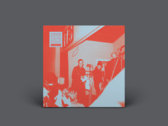
This is the limited CD-R promotional copy so I can't really fully speak on artwork, but I can give an idea based on the CD-R edition itself.  The front of the outer sleeve features a dark metting table of 5 gentlemen from what looks like the 50's.  Perhaps they're politicians but they also look like younger men, perhaps college students.  A strongly conservative picture regardless with a dark overtone.  The back is completely barren with the exception of the small label notices at the bottom and top left corner.  The inner sleeve holds nothing up front but has the track and vinyl information on back as well as explaining that this is a limited CD-R promotional edition.  It also gives the recording information.  All in all, a bleak and somewhat cryptic artwork.  If you want the full picture though, you'll have to get the vinyl.  I can't really speak for it here.  Nonetheless, I think the music within grants any fan of minimally melodic drone or heartfelt dark music in general a purchase. Too many audio experimentalists try too hard to get outside the box and end up making music that sounds like nothing of structure.  For once, perhaps its time to enjoy an artist who uses minimal experimentation in a minimal way.  Its not perfect, but its a fantastic release nonetheless!

Side-Line Magazine:

The wonderfully named Dead Letters Spell Out Dead Words is the brainchild of Thomas Ekelund, a Swedish graphic designer, musician and visual artist. With a long list of releases to his name dating back to 2000, "Lost In Reflections" is Ekelund's first release for Killer Pimp. Recorded at the end of 2005 and first quarter of 2006 just after he was diagnosed with a potentially debilitating mental illness, Ekelund chose to look deep into the shadows and describe what he found through meticulously constructed soundscapes. A mix of dark ambient and experimental electronic music, Ekelund's music vividly portrays a dark, lonely existence in what can be a vast, empty world. As the layers build and soar in, out and through the mix, the heavily emotive mix of tones depicts a solitary figure fighting to make sense of the world around him. Starting out like the soundtrack to the coolest of modern westerns, "This Room Seems Empty Without You" sets the scene gently, acting as an introduction to the rest of the tracks on the album. Intensely personal and intimate, each track bears the gentle tones and melodies of a figure deep in thought, perhaps troubled and fighting with their emotions, desperately trying to regain control. Sparse guitar work adds emotion and feeling to layers of hazy droning sound with tiny almost unnoticed sounds adding an air of intimacy and presence. The further it progresses the deeper Ekelund descends into the uneasy darkness until we reach the epic 19 minute finale of "Himmelschriebenden Herzen", a truly epic track resplendent with layered drones, martial drums, soaring guitar tones and an orchestral backing. "Lost In Reflections" is an intense voyage into the psyche of a man with a story to tell.

Tiny Mix Tapes:

The cover art of Lost in Reflections depicts a sort of bizarre, surrealistic roundtable of clones in business suits, sitting with their arms folded and staring at each other as if they had all just swindled one another in the most heinous way possible. The rest is black. It’s truly a strange scene, one undoubtedly meant to be a reflection of the album’s vaguely spectral title. Thomas Ekelund (the man behind Dead Letters...) writes of the album that it is, to a large extent, an outgrowth of his diagnosis and subsequent battle with borderline personality disorder, and the attendant feelings of alienation, isolation, and the perturbation of the sense of self. He describes his personal degeneration as having gotten to the point where his image of himself was of “An empty shell containing oozing, black bile and nothing else.” For all this marked doom and gloom, it’s interesting that the most salient feature of the album is its approachability.

A listener going into this album would be right to expect a plunging, pit-of-despair excursion through black fields draped with mist, the moaning intestines of glacial caverns and abandoned, decaying toy factories, and at points, we do get those sorts of typical dark ambient tropes. However, much more often we are submerged in a more subtle, profound, and strangely comforting seclusion. Set adrift on a sturdy but pliable raft of electronic snaps, crackles, and pops, we are borne gently to and fro by layered currents of iridescent guitar melodies and rolling swells of delicate fuzz. There is no doubt a strain of loneliness and pain suffered in solitude that runs through each of these songs, but it’s the kind of neurosis that you can bring home to mom. As hard as this album tries to be tortured and inaccessible, it can’t shake the fact that it’s actually a very beautiful and generally pleasant experience.

This is not to say that we’ve got an I’m From Barcelona album on our hands here. There are a couple tracks (“Lost and Losing,” “In Crowded Rooms, On Empty Streets”) that at least break ground on that pit of despair, alerting us to the darker side to Ekelund’s project; but even these moments end up resolving themselves into graceful phantasms of melodies. I suppose that these subtle swayings of emotion are just another manifestation of the album’s theme, but as illustrations of an ailment that Ekelund says “inevitably drapes every aspect of life in shadows that range from shades of gray to coal black,” I can’t help but feel that some of that terror and despair has not been fully transcribed.

If this album is meant to be a declaration and relation of feelings of anguish, existential anxiety, and sequestration, I must say that it has failed. However, there is a type of invitation here, a form of calling into loneliness. We are not asked to empathize with this album, and we are not dragged screaming by its tendrils into the heart of darkness. Instead we are nudged, led quietly by our hands to a place where someone has found something of value, and then we are left there. A child’s fortress inside a giant rotting stump deep in the forest, a dock with no boat or house on the shore of a lake long since turned to swamp — we are left alone, sure, but we are also left with the hope of coming to terms with that fact and of finding something worth being alone for.

Musique Machine, Manuel Pereira:

The Swedish underground has been spitting some of the most un-subduable sonic creatures in recent years, and it has been doing that in a way that is both eclectic and revealing a sense of union, some sort of "swedishdom". Even if they differ purely in terms of sound, there is a common approach when it comes to aesthetics and overall intuition towards music. From warm, floating drones to the most vicious no-fi punk rock, from DIY psychedelic to the most tortured and haunted harsh noise projects, Sweden has been spreading all its sonic diseases with no remorse.

This is my first contact with Dead Letters Spell Out Dead Words, although not my first encounter with Thomas Ekelund(who is DLSODW) this happened when I heard the Teeth "Black Whole Heart" tape on the always excellent, and highly recommended label Klorofyl Kassetter.

Thomas Ekelund´s work as a graphic designer / visual artist melts with what can be heard of his music, one being the extension of another an vice-versa. Both evoke images that are very strong and disturbing but always presented in a rather subtle way, with plenty of reduced-to-ashes goth references. Circular melancholy, extending itself way beyond the first recognizable melody, floating towards the remain, as a fragment buried in a distant corner of a sickened mind, repeating itself to exhaustion.

"This Room Seems Empty Without You" contains the embryo for what will be this journey into multiplication, sparse guitar melody slowly drowning into oblivion and spell-like introversion cast into a inner world of shadows. The same kind of sad, epic tone of old Constellation releases without the usual rollercoaster dynamics, just stagnant and expectant contemplation of all those things bigger than men.

"Lost & Losing" submerges deeper in that contemplation state, where loops keep a trace of all abandoned metaphors, repeating the accumulated pain through sustained echoes. Depth and introversion expand into reverberations of times long diluted. Organic textures aimed to bleak skies, painting with diffuse mysticism. Even if it can´t really be tracked down or measured, something is sincerely immense here. "What I Wouldn´t Give To Fell Alive", brings back familiar melodies, and so is back a warmer and close touch after heavy incursions into desolated mental wilderness. Subtly tripping through oceanic soundscapes, built upon a tension that´s as primal as a reef, or a rock, or an unidentified mass we could lay our claws on. Trembling with decay, in the inevitable perspective of its own sinking.

"Crowded Rooms In Empty Streets" and "What Stays And What Fades Away" are particularly obsessed with texture pieces, with rusty objects suffocating in the dirtiness of tape decomposition. There is a subterranean feeling in the repetitive nature of earthly sounds as in a return to a long forgotten womb. Not yet warm but patiently expecting that moment. Born by dilapidation, slowly carving a shape out of an amorphous mass of hiss. The album concludes with the epic journey contained within "Himmelschreibende Herzen", cumulated in the same boiling matter as hell itself, disappearing forever in an anonymous vastness. It’s Intense, emotional, untraceable.

"Lost In Reflections" is a very introspective album, one which allows access to the darkest yet most beautiful areas of a disturbed human psyche. It’s a slowly fading, strangely menacing, and a very unique listening experience.